A Low Voltage Motor can be a practical choice when equipment needs a motor matched to a lower-voltage supply. In a small pump room, production line, or ventilation system, the right motor can simplify integration with existing electrical equipment. Its nameplate voltage, frequency, power, and speed should match the application—not just the number printed on a supply panel. Details matter.
Choosing a motor also means considering the work it must do. A conveyor that starts under load may need different starting and torque characteristics from a fan that runs steadily. Check the duty cycle, starting current, enclosure, cooling method, and site conditions before comparing models. Lower voltage alone does not guarantee better efficiency, easier installation, or lower operating cost. Not always.
A sound selection starts with reliable specifications and, where needed, review by a qualified electrical or mechanical professional. Confirm compatibility with the supply, drive, protection devices, and connected equipment. Manufacturer documentation and measured operating conditions are more useful than broad claims. There is a trade-off: cable length, current, and installation design can affect the final choice, so one motor type will not suit every site. That deserves a second look. This guide explores why a Low Voltage Motor may fit certain applications, what to assess before purchase, and which practical details are easy to overlook.
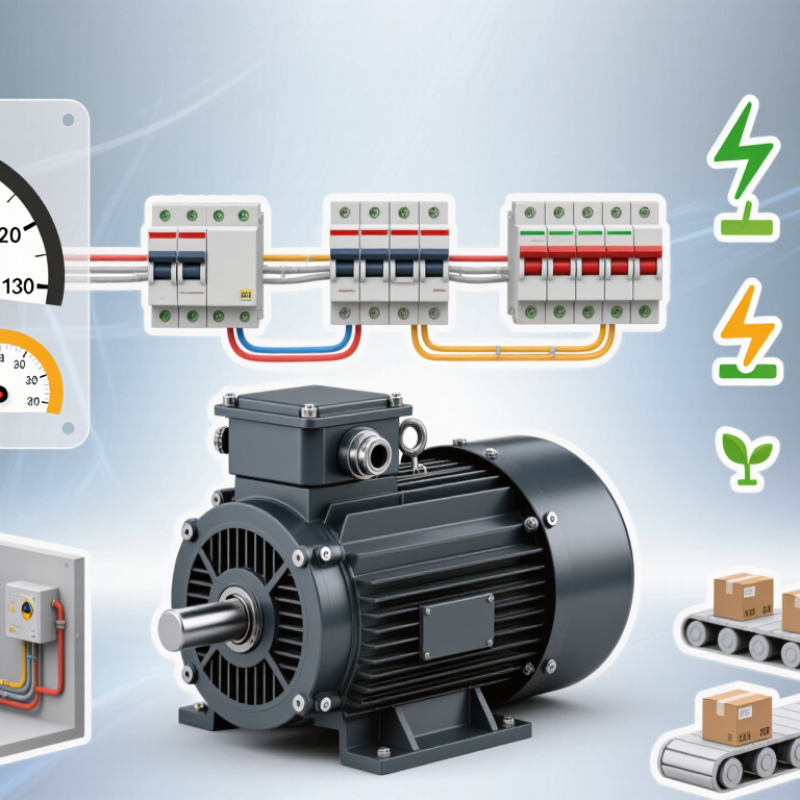
A low-voltage motor is an electric motor designed to run from a comparatively low electrical supply. In many industrial settings, “low voltage” commonly means up to 1,000 volts AC, though definitions can vary by standard and application. The motor converts electrical energy into mechanical motion. Its stator creates a magnetic field that drives a rotor and turns a shaft. Some designs use induction; others use permanent magnets or different control methods. The term describes the supply voltage, not the motor’s size or strength.
A three-phase motor rated at 400 volts might drive a factory pump, conveyor, or ventilation fan. Smaller motors may use 24- or 48-volt DC supplies in vehicles and control equipment.
Check the nameplate before connecting one: voltage, frequency, phase, current, and duty all matter. Keep this practical.
Low voltage does not automatically mean low current. For the same output power, a lower supply voltage can require more current, so cables and protection must be correctly sized.
A mismatch may cause overheating, poor starting, or early failure. The nameplate helps, but ambient heat and frequent starts can complicate the real installation.
A low-voltage motor typically operates from a supply of 1,000 volts or less. Inside the motor, electrical current energizes coils in the stationary stator. In a three-phase induction motor, this creates a rotating magnetic field. The field induces current in the rotor, and their interaction produces torque. The rotor turns slightly slower than the magnetic field; this difference, called slip, is essential to induction. Simple, but not loss-free.
That rotating shaft can drive a pump, fan, or conveyor. The U.S. Department of Energy’s Improving Motor and Drive System Performance sourcebook estimates that motor-driven systems use about 69% of U.S. industrial electricity. The figure covers many motor types, not low-voltage motors alone. Still, it shows why correct sizing and efficient operation matter. A motor that is too large may run inefficiently under light loads. That trade-off deserves a closer look.
Tip: Check the nameplate voltage, frequency, and rated current before connecting a motor. Match the supply and load, and keep cooling vents clear; dust buildup can trap heat. For variable-speed applications, a compatible drive can adjust motor speed to demand. Do not assume every motor-and-drive pairing is suitable. A qualified technician can verify compatibility and installation conditions.
Why Choose a Low Voltage Motor?
What Advantages Do Low Voltage Motors Offer?
Low-voltage motors, typically operating below 1,000 volts, fit many standard industrial power systems. This can simplify integration with existing switchgear, protection devices, and variable-speed drives. For a maintenance team, common voltage levels can also make replacement planning more straightforward. The International Energy Agency’s report Energy-Efficiency Policy Opportunities for Electric Motor-Driven Systems estimates that motor systems use about 45% of global electricity. The U.S. Department of Energy’s 2014 motor-systems sourcebook reports that they account for roughly 68% of U.S. manufacturing electricity use. These figures describe motor systems overall, not low-voltage motors alone.
A key advantage is practical flexibility, not automatic energy savings. A low-voltage motor with a suitable efficiency rating and correctly sized drive may support efficient operation across changing loads. But voltage alone does not guarantee lower energy use. That sounds less exciting than a miracle claim, but it matters. Check load, duty cycle, starting current, and the existing supply before choosing. A small pump running for long hours can make sizing errors costly.
Tips: Match the motor’s rated voltage to the site supply, then confirm its efficiency class and enclosure rating. Record operating hours and load conditions; estimates can be imperfect, but measured data is better than guesswork.
| Dimension | Low Voltage Motor | Practical Advantage | Important Consideration |
|---|---|---|---|
| Voltage range | In common industrial usage, low-voltage motors operate at supply voltages up to 1,000 V AC. Typical three-phase supplies include 400 V and 690 V, depending on the region and installation. | These supply levels are widely available in industrial and commercial facilities, making low-voltage motors suitable for many everyday applications. | Always select a motor whose rated voltage and connection match the available supply and local electrical standards. |
| Installation and equipment | Low-voltage motors can be used with low-voltage switchgear, motor starters, protection devices, and variable-frequency drives designed for the same voltage class. | For many small and medium-sized installations, the required electrical equipment and installation process can be straightforward. | Equipment requirements depend on motor size, starting method, fault level, and local codes; low voltage does not automatically mean a simpler or cheaper installation. |
| Maintenance and servicing | Routine work can include checking bearings, cooling passages, terminal connections, insulation condition, and protective devices. | Many maintenance teams are familiar with low-voltage motor systems, and replacement components are commonly available in industrial markets. | Maintenance must be carried out by qualified personnel using safe isolation procedures. Actual service needs depend on duty, environment, and motor design. |
| Control options | Compatible low-voltage drives and soft starters are available for many applications, including pumps, fans, conveyors, and machine tools. | Speed control, controlled starting, and process adjustment can be incorporated when the application and motor are suitable. | Check drive compatibility, motor insulation, cooling at reduced speed, and the load’s torque requirements before selecting a control method. |
| Current for a given power | At the same power, power factor, and efficiency, a lower-voltage three-phase motor draws more current than a higher-voltage motor. | Low-voltage systems are often practical where power levels and cable runs keep current within manageable limits. | Higher current can require larger conductors and suitable protective equipment. For example, at equal power and operating conditions, a 400 V motor draws about ten times the current of a 4,000 V motor. |
| Best-fit applications | Commonly used for many general-purpose industrial drives, building services, and machinery where the required power is suitable for low-voltage distribution. | A broad range of standard motor and control options makes low-voltage systems a practical choice for many facility-level applications. | For very high power, long cable runs, or site-specific distribution constraints, a higher-voltage system may be more appropriate. |
| Energy efficiency | Efficiency depends on motor design, rated power, load, speed, and operating conditions—not on voltage alone. | Choosing a correctly sized, appropriately efficient motor and avoiding unnecessary operation can reduce energy use. | Compare verified efficiency data at the expected load and check applicable efficiency regulations; low voltage by itself does not guarantee greater efficiency. |
Selection note: Confirm supply voltage, motor rating, starting current, load profile, cable length, protection, and applicable electrical standards before choosing a motor.
Low-voltage motors are common wherever equipment needs dependable, everyday rotation. In factories, they drive pumps, fans, compressors, conveyors, and mixers. A pump may run behind a water-treatment tank; a fan may move air through a warehouse roof. These loads often suit standard low-voltage electrical distribution, especially when machines operate near the motor.
They are also widely used in commercial buildings, farms, and municipal facilities. Heating, ventilation, and air-conditioning systems rely on motors for air handlers and circulation pumps. Irrigation systems use them to move water, while production lines use them to carry or process materials. The U.S. Department of Energy’s 2021 Industrial and Commercial Motor System Market Assessment examines these motor-driven applications across industrial and commercial settings. Actual suitability still depends on load, starting current, operating hours, and the available power supply.
The scale is significant: the International Energy Agency’s 2011 report, Energy-Efficiency Policy Opportunities for Electric Motor-Driven Systems, estimated that motor-driven systems used about 46% of global electricity. That figure covers motor systems broadly, not low-voltage motors alone. It helps explain why small operating improvements can matter across many sites. A low-voltage motor is not automatically the best fit, though; a poorly matched motor can waste energy or struggle with frequent starts. Often, details matter.
Voltage reference: Common AC system ratings include 230 V, 400 V, 480 V, and 690 V. The 1,000 V mark shows the upper boundary commonly used to define low voltage in AC systems.
Low-voltage motors are widely used with pumps, fans, compressors, conveyors, and machine tools. They suit many everyday industrial and commercial drives because compatible power supplies and motor controls are widely available.
Selecting a low voltage motor begins with the driven load, not the nameplate alone. Record required speed, torque, and duty cycle. A conveyor running all shift needs different thermal capacity from a gate that opens occasionally. Check voltage and frequency at the motor terminals, especially when long cables may cause voltage drop during startup. Starting torque matters too. A loaded pump or high-inertia fan may need more than a freely turning machine.
Tips: Note the ambient temperature, mounting position, and enclosure conditions. Compare the motor’s rated output with the load’s actual operating point, not just its peak demand. Small details matter.
Then check the control method, overload protection, and available space. If a variable speed drive is planned, confirm that the motor and insulation suit the intended speed range. Review the manufacturer’s performance curves and installation guidance; ratings can vary with operating conditions. There is no single perfect choice, and a small sizing margin is useful, but excessive oversizing may reduce efficiency at light loads. Recheck the expected starts per hour and maintenance access before specifying the motor. A motor that fits the duty on paper may still run hot if airflow is blocked or the load changes.
It converts electrical energy into shaft motion using a comparatively low-voltage supply. In many industrial settings, this means up to 1,000 volts AC, though definitions vary.
No. For the same output power, lower voltage can require more current. Undersized cables may overheat, especially during startup.
Read its nameplate for voltage, frequency, phase, current, and duty rating. Also check the site supply. Small mismatches matter.
Three-phase motors may run factory pumps, conveyors, or ventilation fans. Smaller 24- or 48-volt DC motors can serve vehicles and control equipment.
No. Efficiency depends on the motor, drive, load, and operating hours. A pump running all day deserves careful sizing.
Check required speed, torque, and duty cycle. A conveyor running all shift needs different thermal capacity from a gate used occasionally.
Ambient heat, mounting position, cable length, and blocked airflow can matter. A motor may run hot despite looking suitable on paper.
Not always. Confirm that the motor insulation and speed range suit the intended drive. I may be oversimplifying, so check the installation guidance.
A Low Voltage Motor converts electrical energy into mechanical motion using electromagnetic forces. Power supplied to the windings creates a magnetic field that interacts with the rotor, causing it to turn and drive connected equipment. Its operating principle is straightforward, but the right design depends on the application, power requirements, and operating conditions.
Low voltage motors are valued for their practical installation, reliable performance, and suitability for many everyday industrial and commercial tasks. They are commonly used in equipment such as pumps, fans, conveyors, and compressors. When choosing a motor, consider the required output, speed, load, duty cycle, available power supply, installation environment, and maintenance needs. Matching these factors to the application helps ensure efficient operation, dependable service, and a motor that fits the demands of the equipment it will drive.

AxisPro Motor