China Best Automation Motor Supplier How to Choose?

Time:2026-09-13 Author:Henry
0%

Choosing the best Automation Motor supplier in China requires more than comparing unit prices. A motor may look identical in a catalogue, yet its winding quality, encoder accuracy, bearings, and thermal protection can differ greatly. In a factory, these details decide whether a conveyor runs smoothly or stops beside a half-packed carton.

Electrical engineering pioneer Lord Kelvin stated, “If you cannot measure it, you cannot improve it.” This principle remains practical for Automation Motor sourcing. A reliable supplier should provide measurable data, including rated torque, speed range, efficiency, insulation class, vibration levels, and duty cycle. Ask for test reports, sample performance records, and clear explanations of quality-control procedures. Do not accept vague promises.

Experience also matters. Visit the manufacturer, when possible, or request a live video inspection of the winding, assembly, and testing areas. Check whether the supplier understands servo systems, stepper applications, PLC communication, and demanding start-stop cycles. Certification is useful, but it is not the whole answer. A certificate cannot replace stable production.

Some decisions remain uncomfortable. The cheapest offer may become expensive after repeated downtime, emergency shipping, or incompatible spare parts. I have seen buyers focus on motor price while overlooking installation support and after-sales response. That mistake is easy to repeat.

Choose a partner that can discuss your load profile, environment, control system, and maintenance plan in precise terms. The right supplier should welcome technical questions. It should also admit limitations. That honesty is often more valuable than a polished sales presentation.
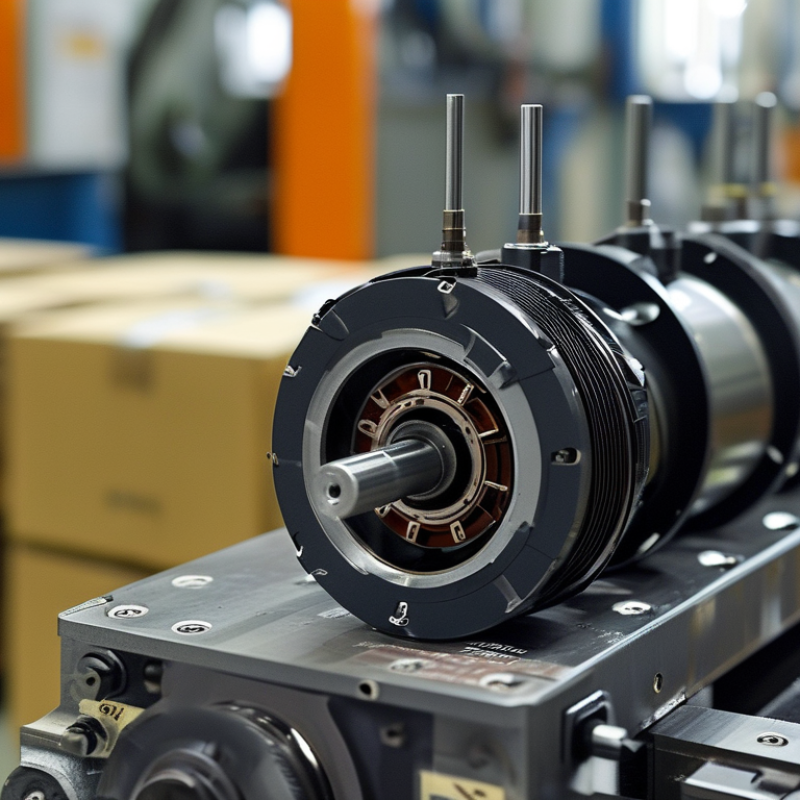
China Best Automation Motor Supplier How to Choose?

Types of Automation Motors and Their Industrial Applications

Automation motors convert control signals into repeatable industrial motion. The best choice depends on load, speed, accuracy, duty cycle, and operating conditions. Servo motors suit robotic arms, packaging axes, and CNC equipment requiring feedback and rapid correction. Encoders expose position errors during sudden load changes. They cost more, but unplanned downtime may cost more. Details matter.

Stepper motors move in controlled increments. They work well in labeling machines, 3D printers, and light-duty indexing tables. They remain practical at low and moderate speeds. However, missed steps can occur when acceleration is too aggressive. This limitation is often overlooked. Brushless DC motors support conveyors, pumps, fans, and compact tools. They provide efficient continuous rotation with limited maintenance. Induction motors remain valuable for heavy conveyors, compressors, and workshop machinery. Their rugged design handles demanding cycles, though speed control may require an inverter.

Linear motors create direct straight-line motion without screws or belts. They fit semiconductor stages, inspection systems, and high-speed pick-and-place equipment. In dusty factories, sealing and thermal management matter as much as torque. When choosing a China-based supplier, compare technical support, quality records, lead times, and spare-part availability. A dependable supplier should provide torque curves, insulation data, encoder details, tested duty ratings, and traceable inspection records. Request application testing before making a volume purchase. Nominal power alone can mislead buyers. A smaller servo may outperform a larger motor through better feedback. Yet paper calculations are not enough. Temperature, cable routing, and operator habits can change results.

China Best Automation Motor Supplier: How to Choose?

Typical operating speed ranges of major automation motor types. Select the motor according to speed requirements, positioning accuracy, load characteristics, duty cycle, and application environment.

Induction motors are commonly used for conveyors and pumps; servo motors for robotics and high-precision motion; stepper motors for low-to-medium speed positioning; BLDC motors for compact, efficient equipment; and synchronous reluctance motors for energy-efficient industrial drives. The ranges shown are typical engineering ranges, not fixed product specifications.

Key Specifications for Comparing Automation Motor Suppliers

China’s Best Automation Motor Supplier: How to Choose?

When comparing automation motor suppliers, begin with application-specific specifications. Match rated voltage, continuous torque, peak torque, speed range, and duty cycle. Rated power alone can mislead. Request torque-speed curves at your actual voltage and ambient temperature. Check efficiency at common operating points, not only the advertised maximum. Small details matter.

Review motor dimensions, shaft tolerances, mounting patterns, protection rating, and thermal limits. An encoder’s resolution and feedback accuracy can affect positioning stability. Ask whether the supplier performs winding tests, insulation checks, vibration testing, and full-load endurance tests.

Reliable suppliers provide dated reports, serial traceability, and clear acceptance criteria. A clean sample is useful, but production consistency matters more.

Supplier evaluation should also include engineering support and documentation quality.

Confirm drawing revisions, wiring definitions, noise limits, and replacement procedures before purchasing. Ask for sample lead time, normal production capacity, spare-part availability, and realistic delivery terms. During a factory assessment, observe how test data is recorded.

Verbal promises are not enough. A polished spreadsheet may still hide weak process control. I have seen technically strong motors fail because connectors were poorly protected during installation. That oversight is easy to miss.

Leave room for pilot testing, field feedback, and one uncomfortable question: which specification has not been fully verified?

How to Evaluate Motor Quality, Certifications, and Reliability

China Best Automation Motor Supplier: How to Choose?

How to Evaluate Motor Quality, Certifications, and Reliability

When evaluating an automation motor supplier, inspect more than the product brochure. Ask for winding data, insulation class, rated torque, speed range, and thermal performance. A dependable supplier should explain these figures clearly. Vague answers deserve caution. Check whether motors follow relevant IEC requirements and hold valid certifications, such as ISO 9001 or CE where applicable. Verify certificate numbers, issuing bodies, product models, and expiration dates. A certificate alone is not proof of every motor’s quality.

Tips: Request test reports for efficiency, vibration, noise, temperature rise, and endurance. Compare the report values with your actual working conditions. Ask for production samples, batch traceability, and inspection records. If possible, visit the facility or arrange an independent factory audit. Look at calibration labels on testing equipment. Small details often reveal process discipline.

Reliability also depends on communication after delivery. Confirm spare-part support, warranty terms, technical response time, and failure analysis procedures. A supplier should explain how it handles overheating, abnormal noise, or repeated startup cycles. Do not select the lowest quotation too quickly. Lower cost may hide weaker bearings or limited testing. Still, expensive pricing does not guarantee excellence. I have found that a practical sample test can expose assumptions that documents miss. The evaluation may feel incomplete, but that is better than trusting polished claims.

Assessing Customization, Compatibility, and Technical Support

China Best Automation Motor Supplier: How to Choose?

Choosing an automation motor supplier starts with the machine, not the catalogue. During commissioning, a motor may face heat, vibration, dust, and repeated acceleration. Ask for torque-speed curves, overload capacity, insulation class, and thermal data. These details reveal whether the motor suits real production conditions.

The International Federation of Robotics reported 541,302 industrial robots were installed worldwide in 2023. That growth makes precise motor matching more important, not less.

Customization should solve a measured problem. Request suitable winding options, shaft dimensions, mounting patterns, brakes, encoders, and communication protocols. Compatibility includes voltage, controller feedback, cable connectors, and available installation space. A small mismatch can create noise, positioning errors, or costly redesigns.

Check efficiency against IEC 60034-30-1 classifications. The IEA’s Energy Efficiency 2023 report states that industry consumed about 37% of global final energy in 2022, so inefficient motor choices deserve serious review.

Technical support is often the difference between delivery and uptime. Confirm response times, commissioning guidance, parameter files, wiring diagrams, and replacement-part availability. Ask whether engineers can analyze vibration logs and alarm records remotely. Good support should continue after payment.

Field experience suggests written answers are safer than casual promises, though suppliers sometimes provide incomplete documents. That weakness needs testing. Request a sample manual and a clear escalation process before placing an order.

Fast support matters. Yet accurate support matters more.

Comparing Pricing, Delivery, Warranty, and Long-Term Service

China Best Automation Motor Supplier: How to Choose?

Price is only the first comparison. A low quotation may exclude controllers, testing, export packaging, or spare parts. Ask for a complete cost sheet with motor power, efficiency, duty cycle, customization, and shipping terms. In one factory project, the cheapest offer looked attractive, but unclear specifications caused repeated revisions. That mistake was expensive.

Delivery reliability matters when production schedules are tight. Request a realistic lead time, not an impressive promise. Confirm production capacity, inspection stages, and how delays are reported. A professional supplier should provide drawings, test records, and shipment photos before dispatch. Keep everything documented.

Warranty terms need careful reading. Check coverage period, response time, replacement rules, and responsibility for transport. A longer warranty is not useful if technical support answers slowly. Ask whether engineers can diagnose vibration, overheating, or encoder faults remotely. Long-term service should include spare-part availability, software updates, and maintenance guidance. Test the communication before ordering. Small delays reveal larger problems.

References from similar applications add practical confidence. Yet references are not proof of future performance. Review measurable data, service records, and failure handling. The best supplier may not offer the lowest price. Reliability often appears after installation.

FAQS

What does an automation motor do?

It converts control signals into repeatable mechanical movement. The required motor depends on load, speed, accuracy, duty cycle, and surroundings.

When is a servo motor suitable?

Servo motors fit robotic arms, packaging axes, and CNC equipment requiring feedback. Encoders detect position errors during sudden load changes.

What are stepper motors commonly used for?

Stepper motors move in controlled increments. They suit labeling machines, 3D printers, and light-duty indexing tables.

Where are brushless DC motors useful?

They support conveyors, pumps, fans, and compact tools. They provide efficient continuous rotation with limited maintenance.

When should an induction motor be considered?

Induction motors suit heavy conveyors, compressors, and workshop machinery. Their rugged construction handles demanding operating cycles.

What advantages do linear motors provide?

Linear motors create direct straight-line motion without screws or belts. They fit inspection systems, semiconductor stages, and fast pick-and-place equipment.

Which technical documents should a supplier provide?

Request torque curves, insulation data, encoder details, and tested duty ratings. Also request winding data, thermal results, and speed ranges.

How can motor quality and certification claims be checked?

Review relevant IEC requirements and applicable certifications. Verify certificate numbers, issuing bodies, product models, and expiration dates.

What should be tested before placing a large order?

Request production samples and compare vibration, noise, efficiency, temperature rise, and endurance results.

How should supplier reliability be evaluated?

Check spare-part availability, warranty terms, response times, and failure-analysis procedures. Ask how overheating, abnormal noise, and repeated starts are handled.

Conclusion

Choosing the right Automation Motor supplier requires more than comparing product prices. First, understand the main motor types and their industrial applications, such as motors used for conveyors, robotics, CNC equipment, packaging systems, and precision motion control. Then compare key specifications, including power, torque, speed, efficiency, control accuracy, operating environment, and compatibility with existing equipment. A reliable supplier should provide consistent product quality, appropriate certifications, thorough testing, and dependable long-term performance.

It is also important to evaluate customization capabilities, communication efficiency, technical support, installation guidance, and replacement services. Suppliers that can adapt motors to specific voltage, mounting, feedback, or control requirements may offer greater value for specialized projects. Finally, consider the complete purchasing experience, including transparent pricing, production capacity, delivery schedules, warranty terms, spare parts availability, and after-sales service. By assessing these factors together, buyers can select an Automation Motor supplier that supports stable operations, reduces maintenance risks, and delivers lasting value.

Henry

Henry

Henry is a dedicated marketing professional with a profound expertise in the company's offerings. With years of experience in the industry, he possesses an impressive understanding of the market dynamics and consumer behaviors that drive success. Henry is committed to sharing his insights through......