Choosing a Heavy Duty Electric Motor is not merely a matter of matching horsepower to a machine. It is a decision about heat, torque, reliability, maintenance, and lifetime energy cost. A motor may look adequate on a nameplate yet fail under repeated starts, dust, vibration, or low-speed loading.
The U.S. Department of Energy’s Motor Systems Market Assessment reports that motor-driven equipment uses about 68% of electricity in American manufacturing. The International Energy Agency also identifies electric motor systems as a major global electricity consumer. These figures make efficiency important, but efficiency alone is not enough. A highly efficient motor can still be unsuitable if its enclosure, insulation class, or service factor is poorly matched. That mistake is surprisingly common.
Motor researcher Thomas A. Lipo has described the induction motor as “the workhorse of industry.” His observation remains relevant in pumps, conveyors, compressors, crushers, and fans. Yet modern applications often demand more than traditional induction performance. Variable-frequency drives, regenerative braking, and precise speed control can change the correct selection. This guide examines those trade-offs through practical specifications, including NEMA frame size, IP or enclosure protection, starting torque, duty cycle, bearing design, and thermal limits. No checklist is perfect. Site conditions are often messier than specifications suggest. A motor exposed to washdown water, frequent cycling, or blocked ventilation deserves closer engineering review. The best choice balances proven field experience with verified data from manufacturers, testing laboratories, and recognized standards.
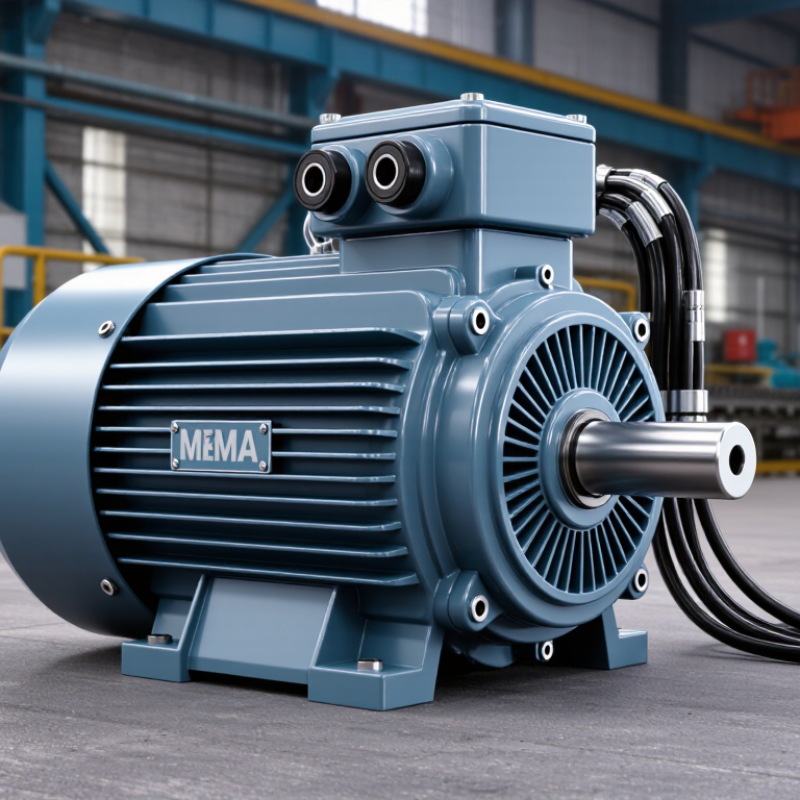
Before choosing a heavy-duty electric motor, define the work it must perform. Record rated load, peak torque, starting frequency, running hours, speed range, and duty cycle. A conveyor moving dense material may need high starting torque, while a pump usually needs steadier operation. Measure the actual load. Nameplate power alone can mislead.
The International Energy Agency reported in Energy Efficiency 2018 that electric motor systems consume about 53% of global electricity. Small efficiency losses therefore become significant over long operating hours. Select the motor’s efficiency class, voltage, frequency, and control method together. IEC 60034-1 provides requirements for motor ratings and performance. Check ambient temperature, altitude, dust, moisture, vibration, and cooling conditions before specifying the enclosure.
A larger motor is not automatically safer. Oversizing can reduce efficiency, increase starting current, and create poor load matching. Heat reveals mistakes. Review the worst operating case, not only the average load. For variable-speed applications, confirm the motor’s cooling performance at low speed and its insulation system under inverter duty. The U.S. Department of Energy’s Motor Systems Market Assessment also emphasizes system-level evaluation, including drives, transmission, and controls. This is where many specifications remain incomplete. Ask for measured torque data, expected starts per hour, and maintenance access. Leave room for realistic uncertainty, but do not hide weak assumptions behind a generous service factor.
How to Choose a Heavy Duty Electric Motor?
Choosing a heavy duty electric motor starts with its working conditions, not its nameplate alone. Induction motors suit rugged conveyors, pumps, and compressors. They tolerate dust, vibration, and frequent industrial use. Synchronous motors maintain steadier speed under changing loads. They can also improve power factor. Brushed DC motors provide strong starting torque, but brushes require regular inspection. That maintenance detail is easy to overlook.
Power ratings show how much work a motor can deliver. Compare kilowatts or horsepower with the machine’s continuous load. Check the duty cycle, service factor, ambient temperature, and starting frequency. A motor rated for 30 kW may struggle if it repeatedly starts a loaded crusher. Short overloads also create heat. More power is not always better.
Torque characteristics often decide the correct motor. High starting torque helps mixers, hoists, and belt conveyors begin moving without severe current spikes. Constant-torque applications need stable force across the operating range. Variable-torque loads, such as centrifugal pumps, usually demand less torque at lower speeds. I have seen installations fail because speed was matched, but starting torque was ignored. Measuring the actual load is wiser than trusting a rough estimate. Leave room for uncertainty, but avoid oversized motors that run inefficiently.
Compare motor types, representative continuous power ranges, and starting-torque characteristics.
The chart uses representative industry ranges for standard low-voltage and medium-voltage industrial motors. Actual limits depend on voltage, cooling, duty cycle, enclosure, and drive configuration.
| Motor type | Typical continuous power range | Typical starting torque | Typical heavy-duty advantage |
|---|---|---|---|
| Squirrel-cage induction | 0.75–500 kW | 150–250% of rated torque | Robust construction and broad industrial availability |
| Wound-rotor induction | 75–5,000 kW | 250–300% of rated torque | High starting torque with reduced starting current |
| Permanent-magnet synchronous | 1–500 kW | 200–300% of rated torque | High efficiency and strong low-speed torque control |
| Synchronous reluctance | 1–500 kW | 150–250% of rated torque | High efficiency without rotor magnets |
For heavy-duty applications, select the motor by required continuous power, load torque, acceleration torque, duty cycle, and allowable speed range. Wound-rotor motors are commonly suited to very high-inertia starting loads, while permanent-magnet synchronous motors are effective when efficiency and precise low-speed torque are priorities. Squirrel-cage induction motors remain a practical choice when ruggedness, maintainability, and compatibility with variable-frequency drives are the main requirements.
A heavy duty motor should match the machine, not simply look oversized. Start with voltage and phase. Confirm the available supply, frequency, starting method, and voltage tolerance before comparing horsepower. A three-phase motor usually suits continuous industrial loads, while a single-phase supply may require different starting equipment. U.S. Department of Energy data estimates that motor systems consume about 68% of industrial electricity in the United States, making correct selection an operating-cost decision, not only a purchasing decision. Check the nameplate carefully. I have seen projects fail because voltage was correct, but phase configuration was ignored.
Speed needs equal attention. A 1,800 rpm motor may run near 1,750 rpm under load, while a 3,600 rpm model behaves differently during acceleration. Match speed to the driven equipment, gearbox ratio, and required torque. Then examine duty cycle under IEC 60034-1 classifications. S1 means continuous duty; intermittent loading may require S3 or another rating. Record running time, starts per hour, load peaks, ambient temperature, and altitude. The U.S. DOE Motor Systems Market Assessment and the IEA Energy Efficiency reports both identify motor efficiency and system matching as major energy-saving opportunities. Yet efficiency figures can mislead when measured without the pump, fan, conveyor, or drive. A motor that works on paper may overheat in a dusty room. Leave room for doubt. Verify actual load data, and question every “standard” assumption.
How to Choose a Heavy Duty Electric Motor?
Efficiency should be judged under the actual load, not only from the nameplate. The U.S. Department of Energy reports that motor-driven equipment uses more than half of the electricity in American manufacturing. A small efficiency loss can therefore become a serious operating cost. Compare full-load and partial-load efficiency, power factor, starting current, and expected running hours. A motor that looks efficient on paper may perform poorly when oversized.
Protection must match the site. Dust, washdown water, chemicals, and outdoor exposure can quickly damage an unsuitable enclosure. IEC 60034-5 defines IP protection levels, but the highest rating is not always the best choice. Check shaft seals, cable entries, condensation, and the real cleaning method. Field inspections often reveal a neglected detail: moisture enters through installation points, not the motor body.
Cooling and installation also shape service life. IEC 60034-6 classifies cooling methods, helping engineers compare fan-cooled, enclosed, and specialized designs. Keep airflow clear, verify ambient temperature, and derate where altitude or heat reduces cooling capacity. Follow alignment, foundation, vibration, and grounding requirements. It sounds basic. It is often missed. A 2023 International Energy Agency analysis identifies motor systems as responsible for roughly 53% of global electricity consumption, making careful installation unusually valuable. No selection is perfect; review measured temperature, vibration, and load data after commissioning, then correct assumptions before failure does.
How to Choose a Heavy Duty Electric Motor?
Reliability should be proven under the motor’s actual working conditions. Check the duty cycle, load profile, ambient temperature, humidity, and starting frequency. A motor that survives a showroom test may fail beside a hot, dusty conveyor. Request test records for insulation resistance, vibration, temperature rise, and overload performance. Pay attention to bearings, seals, and enclosure protection. These small details often decide service life. Do not trust ratings alone. Installation errors can still damage excellent equipment.
Maintenance planning affects both uptime and ownership cost. Choose a motor with accessible grease points, replaceable bearings, clear service instructions, and available spare parts. Review expected inspection intervals and technician skill requirements. A cheap purchase can become expensive after repeated shutdowns. Calculate energy use, repair labor, lost production, and disposal costs over the expected service life. The calculation may feel uncertain, especially with changing workloads. State your assumptions clearly and revise them after operating data becomes available.
Tips: Match the motor to the real load, not the ideal load. Verify efficiency at common operating points. Confirm that certification documents match the installation location and current local requirements. Ask for traceable test reports, not only marketing claims. Record vibration and temperature during the first month. That baseline makes future faults easier to recognize.
Induction motors suit conveyors, pumps, and compressors. They tolerate dust, vibration, and frequent operation. Synchronous motors hold steadier speeds during changing loads. They may also improve power factor. Brushed DC motors offer strong starting torque, but their brushes need regular inspection.
Match the rating with the machine’s continuous load. Check kilowatts, horsepower, duty cycle, service factor, and ambient temperature. Review starting frequency too. More power is not always better. An oversized motor may operate inefficiently.
Starting torque helps mixers, hoists, and belt conveyors begin moving. It reduces severe current spikes during startup. A crusher may overload a motor repeatedly. A suitable speed does not guarantee suitable starting torque.
Measure the actual load whenever possible. Include starting conditions, acceleration, and repeated overloads. Rough estimates can miss important resistance. Leave some uncertainty room, but avoid excessive oversizing.
No. Check efficiency under the real operating load. Compare full-load and partial-load efficiency, power factor, and starting current. Include expected running hours. A motor can look efficient on paper and perform poorly when oversized.
Match the enclosure to dust, washdown water, chemicals, and outdoor exposure. Check shaft seals and cable entries carefully. Moisture may enter through installation points. The motor body is not always the weak point.
Keep airflow clear around the motor. Check ambient temperature, altitude, and cooling method. Heat or high altitude may require reduced loading. Cooling problems can quietly shorten service life.
Verify alignment, foundation strength, vibration, grounding, and cable connections. Inspect temperature, vibration, and load data after commissioning. Small details matter. I would not trust assumptions forever. Recheck them before a failure exposes the mistake.
Choosing the right Heavy Duty Electric Motor begins with clearly defining the operating environment, load requirements, starting conditions, and expected runtime. Compare suitable motor types by reviewing power ratings, torque characteristics, speed control, and performance under changing loads. The motor should also match the available voltage, phase configuration, frequency, speed requirements, and duty cycle to ensure stable and efficient operation.
Beyond basic performance, evaluate efficiency, enclosure protection, cooling methods, mounting arrangements, and installation space. Consider exposure to dust, moisture, heat, vibration, or corrosive conditions when selecting protective features. Reliability is equally important, so review maintenance access, service intervals, safety compliance, documentation, and expected operating life. Finally, compare the total ownership cost, including purchase price, energy consumption, installation, maintenance, downtime, and replacement expenses. A well-matched motor can improve productivity, reduce operating risks, and deliver dependable long-term value.

AxisPro Motor