Selecting the proper Electric Actuator requires careful consideration. The global electric actuator market was valued at approximately $30 billion in 2022, as reported by MarketsandMarkets. This figure highlights the industry's rapid growth and its significance across various applications. In the words of renowned expert Dr. Sarah Henderson, “The efficiency of an Electric Actuator can significantly influence overall system performance.”
When choosing an Electric Actuator, factors such as load requirements, speed, and precision are critical. Many users underestimate the importance of matching the actuator's specifications to their operational needs. A mismatch can lead to operational inefficiencies or even equipment failure, which is costly for businesses.
Reliability is paramount in industrial applications. Studies indicate that nearly 25% of actuator failures are due to improper selection. Decision-makers should prioritize expert advice and technical specifications. Ignoring these aspects can result in suboptimal performance and increased maintenance costs. The process of selecting the right Electric Actuator can be complex, but understanding the variables involved is essential for success.
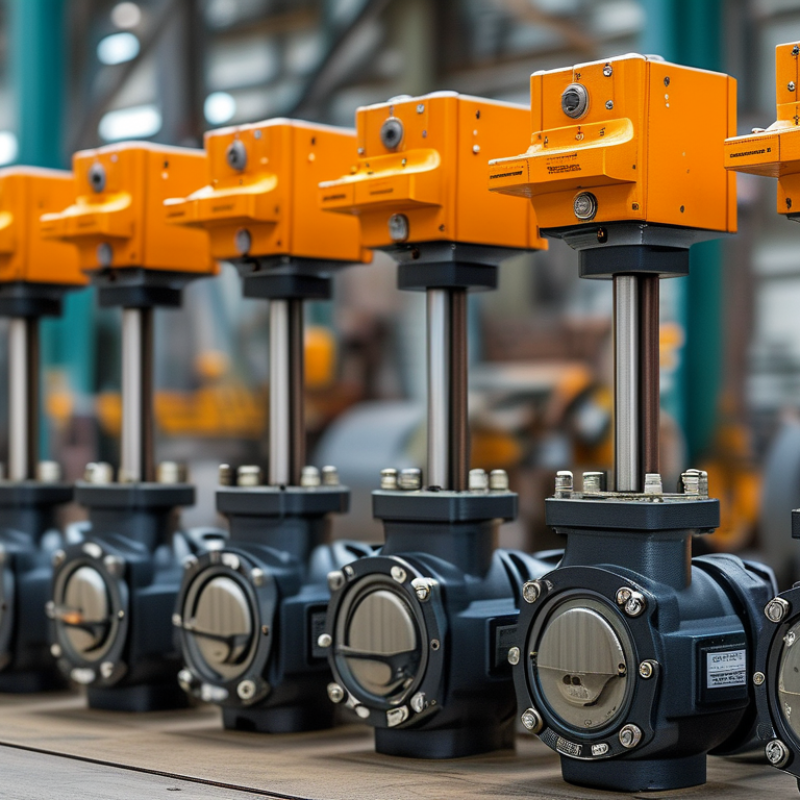
Electric actuators play a vital role in many industries. Understanding their types and applications can lead to better choices for specific needs. There are several types of electric actuators, including rotary and linear. Each type serves distinct functions. Rotary actuators convert electrical energy into rotational movement, while linear actuators create straight line motion.
Choosing the right type depends on the application. For civil engineering, linear actuators often control valves and dampers. In automation, rotary actuators are useful for robotic arms and conveyor systems. Knowing the operational environment is crucial. High-temperature or moist areas may require specialized actuators.
**Tips:** Consider the load capacity. Ensure it matches your requirements. Also, think about response time. Some applications require faster action than others. Evaluate energy efficiency; it can impact long-term costs. This reflection on needs can prevent costly mistakes.
| Actuator Type | Key Features | Applications | Considerations |
|---|---|---|---|
| Rotary Electric Actuator | High torque, continuous operation | Valve control, robotics | Space constraints, torque requirements |
| Linear Electric Actuator | Direct linear motion, adjustable stroke length | Industrial automation, medical equipment | Load capacity, stroke limitations |
| Multi-turn Electric Actuator | Rotational motion over several turns | Heavy-duty valve operations, gates | Power supply, control methods |
| Servo Electric Actuator | High precision, closed-loop control | CNC machinery, aerospace applications | Cost, feedback requirements |
| Submersible Electric Actuator | Corrosion-resistant, operates underwater | Marine applications, underwater robotics | Environmental conditions, sealing integrity |
: The main types are rotary and linear actuators. Rotary actuators create rotational movement. Linear actuators provide straight line motion.
Consider the application type. For valves, choose linear actuators. For robotic arms, rotary actuators are better suited.
The environment can affect actuator performance. High temperatures or moist areas may need specialized actuators for reliability.
Look at metrics like torque, speed, and stroke length. Incorrect torque specifications can lead to failures.
A wrong speed can reduce efficiency. While faster speeds boost productivity, they may also increase wear on components.
Stroke length determines how far an actuator moves. Mismatched lengths can waste energy and pose hazards.
Compatibility ensures smooth integration with existing systems. Check communication protocols and voltage ratings carefully.
Improper installation can lead to delays and malfunctions. Reflect on past experiences to avoid repeating mistakes.
Energy efficiency impacts long-term costs. Evaluate usage carefully to avoid unexpected expenses in the future.
Select an appropriate design and application. Understanding lifespan limitations can help maintain operational consistency.
Choosing the right electric actuator involves a thorough understanding of its types and applications. Electric actuators are essential components that convert electrical energy into mechanical motion, enabling diverse uses across various industries. When selecting an electric actuator, key factors to consider include the specific requirements of the intended application, performance specifications, and installation compatibility. Evaluating these components ensures that the actuator can efficiently meet the operational demands.
Moreover, it is crucial to assess budget considerations by weighing cost against the long-term value provided by the electric actuator. Investing in a high-quality actuator might come with a higher initial cost, but it can lead to better reliability and lower maintenance expenses over time. By carefully analyzing these factors, one can make an informed decision that best suits their operational needs.

 AxisPro Motor