Choosing a Reversible Motor for global sourcing requires more than comparing price and rated power. The right option must match the machine’s load, rotation direction, operating cycle, and installation space. A motor that works well in a workshop may fail in a humid factory or unstable power environment.
Begin with the application. Check torque at startup, rated speed, reversing frequency, duty cycle, shaft dimensions, brake requirements, and noise limits. Confirm the input voltage, frequency, phase, and control method for the destination market. These details can prevent costly redesigns. Small details matter.
Supplier evaluation deserves equal attention. Request complete datasheets, wiring diagrams, test reports, production photos, and sample units. Ask how the supplier controls winding quality, insulation performance, bearing selection, and final testing. Independent inspection can verify noise, temperature rise, current draw, and reversing performance before shipment. Certification requirements also vary by market, so buyers should confirm applicable standards with qualified professionals.
Cost is only one part of landed value. Packaging, spare parts, minimum order quantities, tooling, shipping damage, and warranty response can change the final result. A low quotation may hide weak documentation or inconsistent batches. That risk is easy to underestimate. Practical sourcing experience shows that clear specifications and written acceptance criteria reduce disputes.
No guide can replace application testing. A prototype should run under realistic load, repeated direction changes, and expected environmental conditions. Reconsider assumptions when test results differ from the datasheet. Careful validation, transparent communication, and supplier follow-up make global purchasing more reliable. The best Reversible Motor is not simply the cheapest model; it is the one that performs consistently throughout its intended service life.
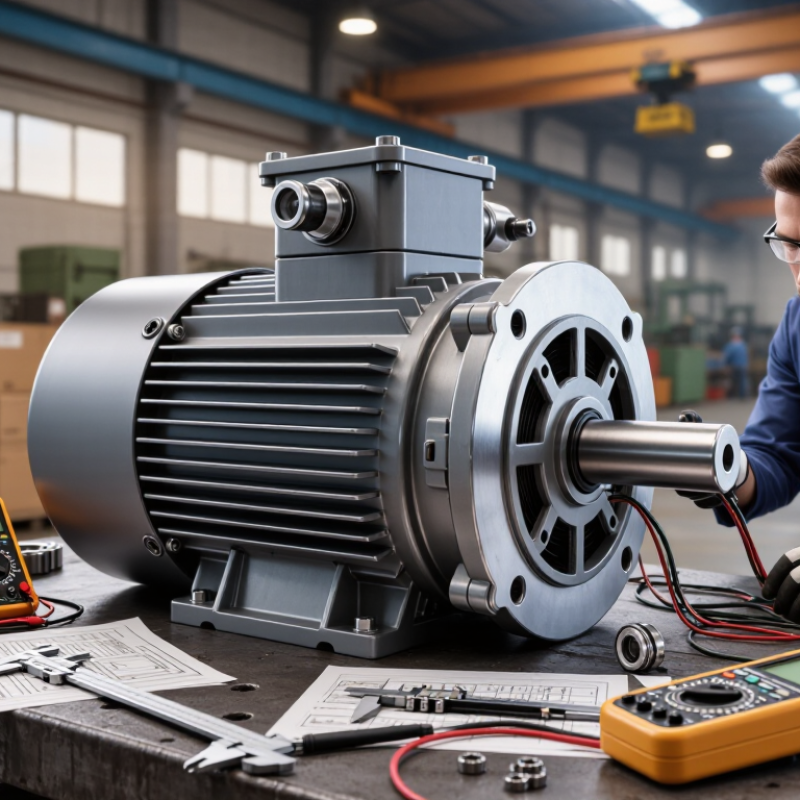
Choosing a reversible motor starts with its operating principle, not its catalog image. A single-phase induction motor reverses when the auxiliary winding’s phase relationship changes. A double-pole, double-throw switch can redirect that winding. The main winding stays connected.
Three-phase induction motors reverse differently. Swapping any two supply phases changes the rotating magnetic field. This method is simple, durable, and common in pumps, conveyors, and machine tools. Brushless DC motors reverse electronically through controller timing, while brushed DC motors reverse by changing armature polarity. Universal motors can reverse too, but their brushes create wear and electrical noise.
Motor type affects sourcing risk. The International Energy Agency reports that electric motor systems consume roughly 46% of global electricity. Even small efficiency losses become expensive at factory scale. IEC 60034 standards provide useful checkpoints for ratings, temperature rise, and performance. However, a standard does not guarantee the motor fits your machine.
Check rated voltage, frequency, starting torque, duty cycle, reversal frequency, and stopping method. A motor that reverses twice per hour may fail under rapid cycling. Confirm whether the controller, brake, and limit switches are included. I would not trust “reversible” on a datasheet alone. Ask for wiring diagrams and measured test results.
One detail is often missed: inertia. A heavy fan continues spinning after power removal, so instant reversal can overload the shaft or gearbox. In practice, a controlled stop may protect the assembly better than a faster reverse command. That choice deserves testing.
Choosing a reversible motor starts with the load, not the catalog title. Define required torque, speed, rotation time, and reversing frequency. A shutter, conveyor, valve, and indexing table impose different thermal stresses. Check whether the motor must reverse under load or stop before changing direction. That detail can alter starting current, brake requirements, and gearbox selection. The IEA’s Energy Efficiency 2017 analysis estimates that electric motor systems consume about 53% of global electricity. Small efficiency losses deserve serious attention during sourcing. However, this figure is broad; actual savings depend on duty cycle and control quality.
Match electrical and mechanical specifications to the installation. Verify rated voltage, frequency, phase, full-load current, torque, and insulation class. Confirm shaft size, mounting dimensions, allowable radial load, and enclosure protection. For humid or dusty sites, the IP rating matters as much as nominal power. IEC 60034-1 provides a useful reference for rating and performance terminology. Request test records at the intended voltage and frequency, rather than a generic datasheet. Reversible operation may need a suitable capacitor, controller, interlock, or dynamic brake. Do not assume “reversible” means instant direction changes. It may not.
Tips: Build a duty profile using operating minutes, idle time, load peaks, and ambient temperature. Request endurance evidence for the planned reversal count. Compare efficiency at partial load, where many systems operate. Leave a design margin, but avoid oversizing. A larger motor can increase inrush current, cost, and low-load losses. Review the specification with equipment and maintenance engineers. Their objections may reveal missing details.
Match motor specifications to the intended application by comparing the required operating speed range. The values below represent typical engineering ranges for common reversible motor applications.
Low-speed applications such as valves and dampers generally require geared motors with high output torque. Conveyor indexing and positioning systems operate at higher speeds and may require faster reversing response, controlled acceleration, and precise braking. Confirm voltage, frequency, torque, duty cycle, inertia, reversal frequency, and environmental requirements before sourcing.
Choosing a reversible motor for global sourcing starts with actual working conditions, not a catalog headline. Voltage must match the available supply, including frequency and phase. A 230-volt motor may perform poorly on a 220-volt line if its control system is incompatible. Confirm rated voltage, tolerance, insulation class, and connector requirements with the supplier. Request test data under load. Paper ratings can hide heat.
Torque and Starting Performance Torque decides whether the motor starts, stops, and changes direction cleanly. Measure the load at startup, during movement, and during reversal. A conveyor carrying wet packages needs more starting torque than its running torque suggests.
Speed and Reversal Control Speed matters too. Check rated revolutions per minute, speed range, acceleration time, and braking method. Fast is not always better. A high-speed motor can overshoot, shake the frame, or damage gears.
Define cycle frequency, pause time, direction-switch delay, and whether reversal occurs while stopped. That detail is often missed.
Create a duty table before requesting quotations. Record voltage, frequency, phase, torque, speed, load, and reversing cycles. Request samples and test them under realistic conditions, including cold starts and repeated direction changes. Listen for clicking, rising temperature, or delayed reversal. I have seen specifications pass review yet fail during continuous cycling. Build a safety margin, but avoid oversized motors. They may cost more and waste energy. Leave room for uncertainty. Supplier drawings, test reports, and traceable inspection records make comparisons more dependable.
Choosing a reversible motor for global sourcing requires more than comparing catalog prices. The right decision begins with supplier evidence: audited facilities, traceable materials, stable production capacity, and responsive engineering support. Ask for recent inspection records, not polished promises. A factory that explains winding tests, insulation checks, and reversal cycles usually understands its process. Still, documents can age quickly. Request samples from current production.
Certifications should match the destination market, motor design, and installation environment. Verify certificates through the issuing body, then check whether the tested model matches your requested voltage, frequency, enclosure, and duty cycle. A familiar certificate logo is not enough. For export orders, confirm labeling, technical files, and safety instructions before production starts. I have seen projects delayed because a compliant motor lacked required local documentation. That mistake is avoidable, but not always.
Quality comparison needs measurable tests: starting torque, noise, temperature rise, efficiency, shaft alignment, and life under repeated reversing. Define acceptance limits in writing, including sampling levels and corrective-action timing. Total cost includes tooling, freight, tariffs, testing, spare units, energy use, maintenance, and warranty handling. A cheaper motor may become expensive after one failed shipment. Yet premium specifications can also waste budget when the application is light-duty. Build a landed-cost model with realistic failure rates, not optimistic assumptions. Leave room for review. Suppliers change, and forecasts are imperfect.
A reversible motor should be tested before any large purchase. Do not trust a catalog drawing alone. Request at least two production samples, not specially prepared prototypes. Test forward and reverse rotation under the expected load. Check starting torque, running current, noise, vibration, and housing temperature. A simple video is useful, but measured data is stronger. Record the voltage, load, test duration, and ambient temperature. Small details matter.
Compliance and shipping can affect the real cost. Ask the supplier to identify required conformity documents for your destination market. Review test reports, material declarations, and product labels carefully. Do not accept copied PDFs without checking model numbers and dates. Confirm customs classification, packaging strength, moisture protection, and delivery terms. A motor may pass factory testing but arrive with damaged connectors. After-sales support should include a written warranty, response times, spare-part availability, and a clear replacement process. Vague promises create delays.
Tips: Prepare one approval sheet for every sample. Include torque, temperature, noise, wiring, and acceptance limits. Keep everything measurable. Ask for photos of final packaging before shipment. I would also order a small pilot batch before scaling. This step costs more initially, but it can reveal inconsistent assembly. My own process is not perfect; supplier data may still be incomplete. Leave room for retesting and revise the checklist when new problems appear.
It changes the auxiliary winding’s phase relationship. A double-pole, double-throw switch can redirect that winding. The main winding remains connected. Use the wiring diagram, not assumptions.
Swap any two supply phases. The rotating magnetic field changes direction. This method suits pumps, conveyors, and machine tools. Disconnect power safely before testing.
Confirm voltage, frequency, phase, torque, speed, duty cycle, and reversal frequency. Check the stopping method, insulation, connectors, controller, brake, and limit switches. Measure real loads. Catalog ratings may hide heat.
A heavy fan can keep spinning after power removal. Instant reversal may overload the shaft, gearbox, or frame. A controlled stop can protect the assembly. Faster is not always safer.
Measure startup, running, stopping, and reversal torque. Record acceleration time and speed range. A conveyor with wet packages may need extra starting torque. Fast motion can cause overshoot and vibration.
Record voltage, frequency, phase, load, torque, speed, pause time, and direction changes. Include cycles per hour. Test cold starts and repeated reversals. Keep uncertainty visible.
Request at least two ordinary production samples. Test both directions under the expected load. Record current, temperature, noise, vibration, voltage, duration, and ambient conditions. Measure it under load.
Check conformity documents, test reports, material declarations, labels, model numbers, and dates. Confirm packaging strength, moisture protection, customs classification, and delivery terms. Photograph final packaging. Small details matter.
Request written warranty terms, response times, spare-part availability, and replacement steps. A small pilot batch can reveal inconsistent assembly. My checklist is not perfect. Retest when new problems appear.
Choosing the right Reversible Motor for global sourcing requires more than comparing prices. Start by understanding the available motor types, their operating principles, and how each design supports forward and reverse rotation. Then match the motor’s construction and performance to the intended application, considering factors such as load, operating environment, duty cycle, installation space, and control method. Carefully evaluate voltage compatibility, rated and starting torque, operating speed, reversing frequency, response time, and braking or protection requirements to ensure reliable performance.
Supplier selection should include a comparison of certifications, manufacturing quality, technical experience, production capacity, lead time, and total cost of ownership rather than unit price alone. Before placing a larger order, verify samples through practical testing and confirm product compliance, documentation, packaging, shipping arrangements, and after-sales support. A structured evaluation process helps reduce sourcing risks, improve long-term reliability, and ensure the selected motor meets both application needs and international market requirements.

AxisPro Motor