Choosing the best High Speed Motor in 2026 is not simply a matter of finding the highest RPM. A motor that spins impressively on a specification sheet may overheat, lose efficiency, or struggle under real operating loads. The right choice depends on the machine, duty cycle, available cooling, and required torque. Small details matter: a tight equipment enclosure can trap heat, while a mismatched drive may limit performance. There is no universal winner.
A useful comparison should examine rated speed, torque across the operating range, efficiency, thermal limits, bearing design, vibration, and service requirements. Check the manufacturer’s performance curves and test conditions, not only headline ratings. Confirm that the motor and inverter are compatible, and consider whether the application needs continuous operation or short bursts. These checks help distinguish a genuinely suitable motor from one that merely looks powerful. That is less dramatic, but more dependable.
This guide explores the leading selection factors and motor types to consider in 2026. It also explains which specifications deserve close attention and what questions to ask suppliers. Exact performance varies with installation and load, so independent testing and clear documentation matter. I would be cautious about any ranking that ignores those conditions. The best motor is the one that performs reliably in your actual setup—not just in a brochure.
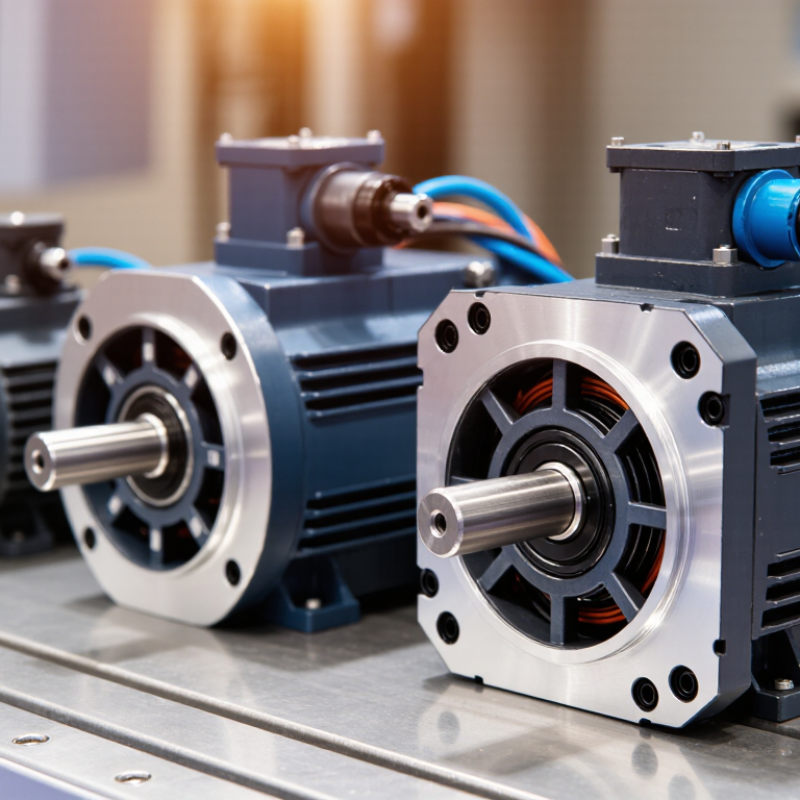
Define High Speed: A 2-Pole Motor Runs at 3,600 rpm on 60 Hz Power
What does “high speed” mean for a motor in 2026? A useful starting point is pole count and supply frequency. On 60 Hz power, a two-pole motor has a synchronous speed of 3,600 rpm, calculated as 120 times frequency divided by pole count. This is a benchmark, not always the shaft speed you will measure.
An induction motor runs slightly below synchronous speed because its rotor needs slip to produce torque. Depending on design and load, its rated speed may sit around 3,450–3,580 rpm. A synchronous motor, by contrast, can run at the stated synchronous speed. That distinction is easy to miss. The U.S. Department of Energy’s 2014 U.S. Industrial Electric Motor Systems Market Assessment estimates motor-driven systems use about 54% of electricity consumed in U.S. manufacturing. So efficiency and operating conditions matter alongside rpm.
For a real selection, compare the motor’s nameplate speed with the required load speed, torque, and duty cycle. Check whether a drive will control speed, and confirm the motor can handle the heat and vibration at the intended operating point. I would not choose by headline rpm alone. A fan and a conveyor can need very different torque, even at similar speeds. The 3,600-rpm figure defines the two-pole, 60 Hz reference; it does not automatically identify the best motor for a particular machine.
Compare Induction, PMSM, and Reluctance Motors by Speed, Torque, and Efficiency
What Is the Best High Speed Motor in 2026?
Compare Induction, PMSM, and Reluctance Motors by Speed, Torque, and Efficiency
The best high-speed motor depends on the load, cooling, and drive system—not speed alone. Induction motors are rugged and tolerate demanding industrial service. At very high speeds, however, rotor heating and slip can reduce efficiency. Their torque is dependable, though the overall package may need more cooling.
Permanent magnet synchronous motors (PMSMs) offer high torque density and strong efficiency across many operating points. They suit compact equipment where mass and energy use matter. But magnets and rotor retention need careful thermal and mechanical design. Reluctance motors use a simpler rotor and can handle high speeds, yet torque ripple and acoustic noise may require attention. No type wins every duty cycle. A tidy ranking can mislead.
Tips: Compare torque across the full speed range, not just peak values. Check the motor’s cooling method, bearing limits, and drive compatibility. Ask for test data under conditions close to your actual load. A quieter bench test may not predict performance inside a hot, enclosed machine. I would recheck the choice after reviewing real duty-cycle data; paper efficiency alone is not enough.
Check Variable-Speed Motor Ratings Against IEC 60034-30-2 IE Classes
What Is the Best High Speed Motor in 2026?
Check Variable-Speed Motor Ratings Against IEC 60034-30-2 IE Classes
A high-speed motor’s efficiency label needs context. IEC 60034-30-2 defines IE efficiency classes for certain variable-speed AC motors designed for converter operation. Check that the motor’s stated class follows this standard, rather than assuming a general efficiency rating applies. The distinction is easy to miss.
Compare ratings only when test conditions match. Note the rated speed, torque, power, and supply frequency in the technical documents. A motor rated at one operating point may perform differently when driven at another speed. Look for the specified converter conditions and test method, too. Details matter.
In a workshop, a motor may spend hours below its rated speed, where cooling and load can affect real-world performance. The IE class is useful, but it does not predict every installation’s energy use. Check whether the motor’s cooling method suits the speed range, and confirm that its duty cycle matches the application. A neat number on a datasheet is reassuring, perhaps too reassuring. Ask for the test report if the rating or conditions are unclear, and compare equivalent operating points before choosing.
What Is the Best High-Speed Motor in 2026? Check Variable-Speed Motor Ratings Against IEC 60034-30-2 IE Classes
IEC IE classes rank motor efficiency; they are not universal efficiency percentages. The chart shows the class order, not measured motor performance.
There is no single “best” high-speed motor based on class alone. Compare certified efficiency data at the required rated power, speed, and operating point, and confirm the applicable IEC standard edition and scope. Higher IE class indicates a higher efficiency class, not a fixed percentage gain.
Measure Induction-Motor Efficiency Using IEEE 112 Test Methods
What Is the Best High Speed Motor in 2026?
Measure Induction-Motor Efficiency Using IEEE 112 Test Methods
The best high-speed motor depends on its load, operating speed, and duty cycle. A rating on a data sheet cannot show how efficiently a motor performs under your actual conditions. IEEE 112 provides standardized methods for measuring induction-motor efficiency, helping engineers compare results on a consistent basis. Small details matter.
For a practical test, record input power, voltage, current, speed, torque, and winding temperature. With an input-output method, a calibrated dynamometer measures shaft output while electrical instruments measure power entering the motor. Keep the load steady at each test point, and document the setup. Temperature correction matters because winding resistance changes as the motor heats. At high speeds, vibration and mechanical losses can complicate readings, so check alignment and allow readings to stabilize. One test may still miss real-world variation.
Tips: Choose the IEEE 112 method that fits the motor and test facility. Verify instrument calibration, note ambient conditions, and repeat key readings. If results differ, investigate the setup before trusting the smallest efficiency gain.
Choose the Best Fit by Load, RPM, Duty Cycle, Cooling, and Drive Compatibility
Choosing a high-speed motor in 2026 starts with the load, not the maximum RPM on a specification sheet.
Map continuous torque, starting torque, acceleration, and brief overloads. A cutting spindle has different demands from a fan running steadily. Size for the real operating point. Not the peak.
Duty cycle changes the thermal picture. A motor starting every few seconds can heat differently from one running continuously at similar average power. Check winding limits, ambient temperature, enclosure, and cooling airflow. At high speed, rotor balance and bearing limits matter. Ask for the allowable speed under your actual load, not only no-load speed. Heat matters.
Drive compatibility also deserves close attention: verify voltage, current, control method, and required speed range with the drive supplier. The International Energy Agency’s 2011 report, Energy-Efficiency Policy Opportunities for Electric Motor-Driven Systems, estimates motor-driven systems use about 45% of global electricity. The U.S. Department of Energy’s 2014 motor systems assessment puts their share at roughly 68% of U.S. manufacturing electricity. Those figures make efficiency worth checking at the operating point, not just at a headline rating. One assumption to question: a larger motor is always safer. Oversizing can reduce efficiency under light loads, and the best choice may still need a real-world thermal test.
Conclusion
Choosing the best High Speed Motor in 2026 starts with understanding speed: a two-pole motor has a synchronous speed of 3,600 rpm on a 60 Hz supply, while an induction motor typically runs somewhat slower under load. Induction, permanent-magnet synchronous, and reluctance motors each offer different balances of speed, torque, efficiency, control, and cost. The right option depends on how the motor will perform in its actual operating conditions, not on speed alone.
For variable-speed applications, check that efficiency ratings and operating conditions are clearly specified, and compare applicable IEC 60034-30-2 IE classes. Induction-motor efficiency can be evaluated using IEEE 112 test methods. Before selecting a motor, consider the driven load, required RPM and torque, duty cycle, cooling method, and compatibility with the intended drive. Matching these factors helps identify a motor that can deliver dependable performance and suitable efficiency throughout its expected operating range.

 AxisPro Motor