In 2026, global equipment buyers face a wider range of motor choices than ever. The right Power Transmission Motor can improve efficiency, uptime, and maintenance control. It can also create hidden costs when selected without checking the complete drive system. A conveyor motor may run continuously in a dusty warehouse. A pump motor may face moisture, pressure changes, and frequent starts. Small details matter. Operating voltage, load profile, speed, torque, enclosure rating, and installation space all affect performance.
This guide examines major motor types used in modern power transmission systems. Induction motors remain practical for conveyors, fans, compressors, and general industrial machinery. Synchronous motors can support precise speed control and high efficiency under stable operating conditions. Servo motors suit robotic equipment, packaging lines, and applications requiring accurate positioning. Geared motors combine a motor with speed reduction, helping deliver higher output torque within limited space. Brushed DC motors still serve selected systems, although maintenance requirements may limit their use.
Reliable purchasing decisions require more than comparing catalogue prices. Buyers should review rated efficiency, thermal class, duty cycle, bearing design, noise levels, spare-part access, and supplier testing records. Independent certifications and verified datasheets add confidence. Yet published efficiency figures may not reflect real factory conditions. Installation quality, alignment, lubrication, and overload events can change results. That part is often underestimated.
This overview is designed for engineers, distributors, OEMs, and procurement teams. It connects technical specifications with practical operating needs. The best motor is not always the most powerful. It is the one that delivers dependable torque, safe operation, manageable lifecycle costs, and suitable service support.
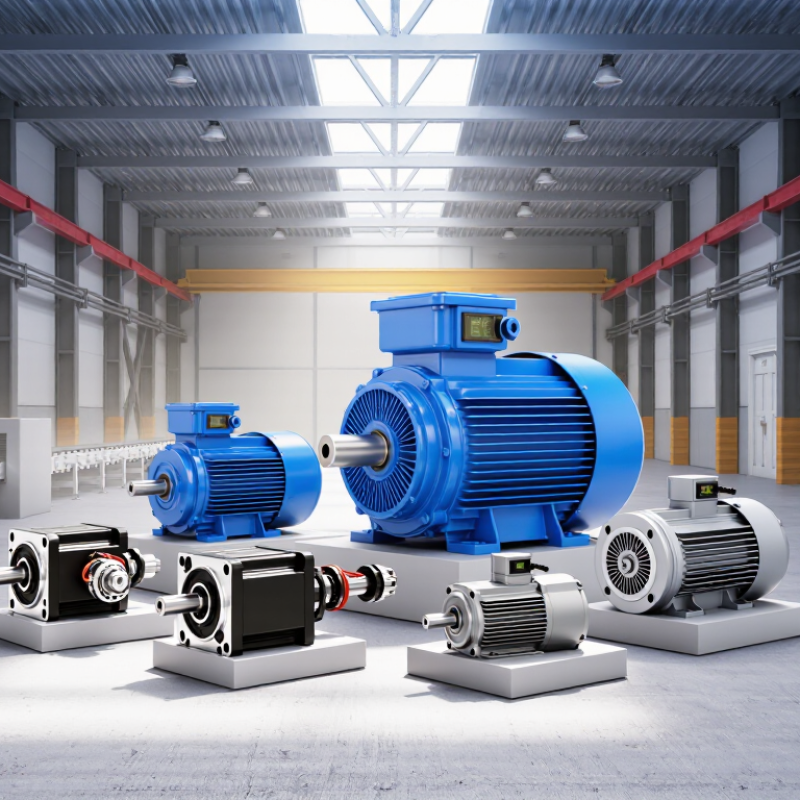
Power transmission projects in 2026 will not have one universal motor answer. Induction motors remain practical for pumps, fans, compressors, and conveyors. They tolerate dust, simple controls, and uneven maintenance. Synchronous motors suit constant-speed, high-efficiency duties. Permanent-magnet versions can reduce rotor losses, but materials and service skills raise procurement questions. According to the IEA’s Energy Efficiency 2023 report, electric motor systems consume about half of global electricity. Small efficiency gains become large operating savings.
Variable-frequency drives make both motor families more flexible. They help conveyors start smoothly and allow pumps to slow during low demand. Yet harmonics, bearing currents, and poor settings can shorten service life.
Buyers should request verified efficiency data at actual load, not only nameplate performance. The U.S. Department of Energy’s Motor Systems Market Assessment 2022 identifies motor-driven equipment as a major industrial electricity user. A highly efficient motor can still waste energy when oversized.
Servo motors fit precise indexing, robotics, and synchronized transmission. Their feedback systems deliver fast positioning, though commissioning is less forgiving. Switched-reluctance motors offer robust rotors and high-speed potential, but acoustic noise remains a concern. DC motors still appear in legacy lines, despite higher brush maintenance.
I have seen projects overvalue purchase price and undervalue spare parts, ambient temperature, and grid compatibility. That mistake is easy to repeat. Global buyers should examine IEC efficiency class, enclosure rating, duty cycle, insulation, and local repair capability.
2026 Top Power Transmission Motor Types for Global Buyers
Power transmission motors convert electrical energy into controlled torque. Their output moves conveyors, pumps, compressors, mixers, and machine tools. In a typical system, the motor drives a coupling, gearbox, belt, or direct shaft. Induction motors remain practical for constant-speed duties. Synchronous reluctance and permanent-magnet motors suit applications needing higher efficiency and precise control. Variable-frequency drives adjust speed and reduce mechanical shock during acceleration.
Motor selection should follow the load profile, not only the nameplate rating. A conveyor may need high starting torque, while a pump often rewards steady, efficient operation. The IEA reports that electric motor-driven systems consume roughly 43–46% of global electricity. The U.S. Department of Energy’s Motor Systems Market Assessment also identifies motors as major electricity users in manufacturing. Small efficiency losses become expensive across continuous production.
Real installations are less tidy. Dust, misalignment, poor lubrication, harmonics, and frequent starts can shorten service life. That assumption fails. Buyers should check ambient temperature, enclosure protection, duty cycle, service factor, and available voltage. Thermal monitoring and vibration checks provide useful evidence during commissioning. IEC 60034 efficiency classifications help compare motor performance, but actual savings depend on the entire transmission system. A highly efficient motor can still waste energy through an oversized gearbox or an incorrectly tensioned belt.
| Motor type | How it works | Typical industrial power range | Typical speed range | Typical efficiency | Power-transmission strengths | Common industrial systems | Main buyer considerations |
|---|---|---|---|---|---|---|---|
| Three-phase AC induction motor | A rotating magnetic field in the stator induces current in the rotor, producing torque without electrical connections to the rotor. | Approximately 0.12 kW to several MW | About 750–3,600 rpm at 50/60 Hz; variable-speed operation requires a drive. | Approximately 80–97%, depending on size and efficiency class | Robust construction, reliable continuous operation, good overload capability, and broad availability of geared configurations. | Conveyors, pumps, fans, compressors, mixers, hoists, crushers, and general-purpose gear drives | Starting current, speed regulation, service factor, enclosure, cooling, duty cycle, and required variable-frequency drive |
| Synchronous reluctance motor | The rotor aligns with the rotating stator field through magnetic reluctance differences and runs at synchronous speed. | Approximately 1.5 kW to several hundred kW | Typically 750–3,600 rpm, with speed set by supply frequency and drive control | Approximately 90–97% in suitable industrial sizes | Low rotor losses, high efficiency at variable load, and strong suitability for constant-torque or variable-torque drive systems. | Pumps, fans, compressors, conveyors, extruders, and high-duty machine drives | Requires an appropriate inverter, correct motor-drive pairing, commissioning quality, and attention to low-speed torque requirements |
| Permanent-magnet synchronous motor | Permanent magnets create the rotor field, while electronically controlled stator currents produce synchronous torque. | Approximately 0.1 kW to several MW | About 500–6,000 rpm; higher speeds are possible in specialized designs | Approximately 90–98% | High power density, high efficiency over wide operating ranges, precise speed control, and reduced rotor heating. | Servo drives, robotics, elevators, compressors, electric traction, machine tools, and high-efficiency pumps | Magnet temperature limits, demagnetization risk, drive compatibility, thermal management, and higher material sensitivity |
| Brushed DC motor | A commutator and brushes switch armature current mechanically to maintain torque as the rotor turns. | Approximately 10 W to 100 kW | About 500–5,000 rpm, depending on design and load | Approximately 70–90% | Simple speed control, high starting torque, and straightforward integration with DC power supplies. | Battery-powered equipment, small conveyors, actuators, winches, hoists, and legacy industrial machinery | Brush and commutator wear, electrical noise, maintenance access, duty cycle, and replacement-part availability |
| Brushless DC motor | Electronic commutation replaces brushes; permanent magnets on the rotor interact with controlled stator currents. | Approximately 10 W to 100 kW | About 500–10,000 rpm, depending on pole count and control method | Approximately 80–95% | Low maintenance, compact size, good dynamic response, and efficient variable-speed operation. | Fans, pumps, conveyors, compact compressors, automated equipment, cooling systems, and mobile machinery | Electronic controller requirements, sensor or sensorless feedback, magnet temperature, noise, and regenerative behavior |
| Servo motor | A motor, feedback device, and closed-loop controller continuously correct position, speed, and torque errors. | Approximately 50 W to 200 kW | About 1,000–6,000 rpm; short-duration higher speeds are application-dependent | Approximately 85–97% | Excellent positioning accuracy, rapid acceleration and deceleration, high peak torque, and coordinated multi-axis motion. | Robotics, CNC equipment, packaging, printing, pick-and-place systems, winding, and precision conveyors | Feedback resolution, tuning, peak versus continuous torque, cable quality, inertia matching, and control-system compatibility |
| Stepper motor | The controller energizes stator phases in discrete sequences, causing the rotor to move through defined angular steps. | Approximately 5 W to 2 kW | Typically 0–1,500 rpm; usable torque decreases as speed rises | Approximately 50–85%, depending on speed, current, and load | High holding torque, simple open-loop positioning, predictable incremental motion, and low cost for moderate-duty axes. | Indexing tables, laboratory equipment, small automation, feeders, valves, and desktop manufacturing systems | Resonance, heat at standstill, missed steps under overload, limited high-speed torque, and possible need for closed-loop feedback |
| Switched reluctance motor | Sequentially energized stator phases pull salient rotor poles toward the position of lowest magnetic reluctance. | Approximately 1 kW to several hundred kW | About 500–20,000 rpm, depending on design and control | Approximately 75–95% | High-speed capability, strong thermal tolerance, simple rotor construction, and good fault-tolerance potential. | Pumps, compressors, industrial fans, traction auxiliaries, appliances, and high-speed drive systems | Torque ripple, acoustic noise, controller design, position sensing, electromagnetic compatibility, and application-specific optimization |
Choosing a power transmission motor depends on four practical variables: efficiency, torque, speed, and control.
Induction motors remain common for pumps, fans, and conveyors. Their design is durable and cost-effective, but speed control usually requires a variable-frequency drive. Permanent-magnet motors can deliver higher efficiency and stronger torque density, especially at partial loads. The U.S. Department of Energy’s Motor Systems Market Assessment reports that motor systems consume more than half of electricity in U.S. manufacturing. Small efficiency gains therefore become meaningful across continuous-duty equipment. The International Energy Agency also identifies motor-driven systems as a major global energy-saving opportunity. Still, efficiency ratings alone can mislead buyers. A motor may perform well at rated load but lose advantages under frequent starts.
Torque behavior separates motor types more clearly. Synchronous reluctance motors provide stable speed and good efficiency, while servo motors offer precise position control and rapid acceleration. Standard induction motors tolerate harsh working conditions, yet their torque response depends heavily on drive settings. Direct-on-line starting can create high current and mechanical shock. A controlled drive reduces these effects, but adds configuration work. IEC 60034-30-1 efficiency classes help compare motors, although they do not describe the complete system’s performance. Real installations include cables, gearboxes, cooling fans, and idle periods. That part is often underestimated. Buyers should compare measured torque curves, operating speed ranges, duty cycles, and control accuracy instead of selecting by efficiency class alone. Data sheets are useful, but field conditions remain less tidy.
Key differences in representative rated-load efficiency, torque density, speed capability, and control requirements.
| Motor Type | Typical Efficiency | Torque Density | Typical Speed Range | Control Requirement |
|---|---|---|---|---|
| Three-Phase Induction Motor | 85–95% | 2–5 Nm/kg | 3–15 krpm | Moderate; VFD commonly used |
| Permanent-Magnet Synchronous Motor | 90–97% | 5–10 Nm/kg | 3–20 krpm | High; precise inverter control required |
| Synchronous Reluctance Motor | 88–95% | 3–7 Nm/kg | 3–12 krpm | High; inverter and rotor-position control |
| Brushed DC Motor | 75–90% | 2–5 Nm/kg | 2–6 krpm | Low to moderate; brush maintenance required |
The chart uses representative midpoint efficiencies from common industrial operating ranges, not manufacturer-specific ratings. Actual performance depends on motor size, load profile, cooling, inverter quality, duty cycle, and operating speed. PMSM generally provides the highest efficiency and torque density, while induction motors remain a robust choice for cost-sensitive applications.
For global buyers in 2026, motor selection begins with standards, not catalog rankings. Squirrel-cage induction motors remain practical for pumps, fans, and conveyors. Permanent-magnet synchronous motors offer high efficiency and compact size. Synchronous-reluctance motors can reduce rare-earth dependence, but their drive settings need careful commissioning.
The International Energy Agency reports that electric motor systems consume about half of global electricity. The U.S. Department of Energy also identifies motor systems as major industrial energy users. These figures make efficiency a purchasing issue, not a minor specification. IEC 60034-30-1 defines IE efficiency classes, while IEC 60034-2-1 supports comparable motor-loss testing. Buyers should verify the declared IE class under the actual load, speed, and voltage. A laboratory rating may not match a dusty factory floor.
Voltage, frequency, duty cycle, insulation, enclosure, and cooling method require equal attention. IEC 61800-9-2 helps assess motor-drive system efficiency, especially with variable-speed applications. NEMA MG 1 may apply in North American projects, while IEC requirements often guide international installations. Confirm shaft dimensions, bearings, vibration limits, and service-factor expectations before ordering. In field commissioning, small mismatches can create noise, heat, or repeated trips. No selection matrix is perfect. A lower purchase price can become expensive after one year of poor loading. Ask for test certificates, efficiency maps, thermal data, and harmonic limits. Suppliers should explain assumptions clearly, even when the answer is inconvenient.
Choosing a motor type begins with the driven load, not the motor catalogue. A conveyor needs steady torque at low speed. A centrifugal pump usually rewards speed control and efficient partial-load operation. An induction motor remains practical for rugged, constant-speed duties, especially where maintenance simplicity matters. With a variable-frequency drive, it can also handle changing production demand.
Permanent-magnet synchronous motors suit compact equipment requiring high efficiency and strong torque density. They can reduce rotor losses, but their controls and repair procedures are more demanding. Synchronous-reluctance motors offer another efficient option for pumps, fans, and compressors, particularly when reduced maintenance is valuable. For battery systems or specialized low-voltage equipment, brushless DC motors may fit better. They still require careful thermal design.
The U.S. Department of Energy’s Motor Systems Market Assessment reports that motor-driven equipment uses about 69% of industrial electricity in the United States. The IEA has also estimated that electric motor systems consume roughly half of global electricity. Small efficiency differences matter. A motor running 6,000 hours annually can turn minor losses into substantial operating costs. Check rated torque, overload capacity, starting current, duty cycle, enclosure, and ambient temperature. IEC 60034-30-1 efficiency classes help compare performance, but they do not replace application testing. A neat spreadsheet can still mislead. Real shafts vibrate, loads fluctuate, and installers sometimes oversize motors. That mistake deserves more attention.
Compare efficiency, torque, speed range, control accuracy, duty cycle, and installation conditions.
Induction motors are durable and cost-effective for many pumps, fans, and conveyors.
They can provide higher efficiency and stronger torque density, especially under partial loads.
Ratings often describe performance near rated load and controlled test conditions.
Synchronous-reluctance motors offer stable speed and good efficiency.
Direct starting can produce high current, mechanical shock, noise, and thermal stress.
Verify voltage, frequency, insulation, enclosure, cooling, shaft dimensions, bearings, and vibration limits.
Request efficiency maps, torque curves, thermal data, test certificates, and harmonic limits.
In 2026, Power Transmission Motor technology continues to support reliable movement, speed control, and energy conversion across industrial systems. The main motor types include induction motors, synchronous motors, permanent magnet motors, servo motors, and DC motors, each offering different advantages in starting performance, torque delivery, operating speed, efficiency, and control flexibility. Understanding how these motors interact with gearboxes, drives, conveyors, pumps, compressors, and automated equipment is essential for selecting a suitable solution.
Global buyers should evaluate efficiency ratings, duty cycles, load characteristics, environmental conditions, maintenance requirements, voltage compatibility, and compliance with applicable international standards. Application needs should guide the final decision: induction motors may suit general-purpose machinery, synchronous and permanent magnet motors can support high-efficiency operation, while servo motors are appropriate for precise motion control. By comparing performance, lifecycle cost, integration requirements, and operating conditions, buyers can choose a Power Transmission Motor that delivers dependable service and long-term value.

AxisPro Motor